
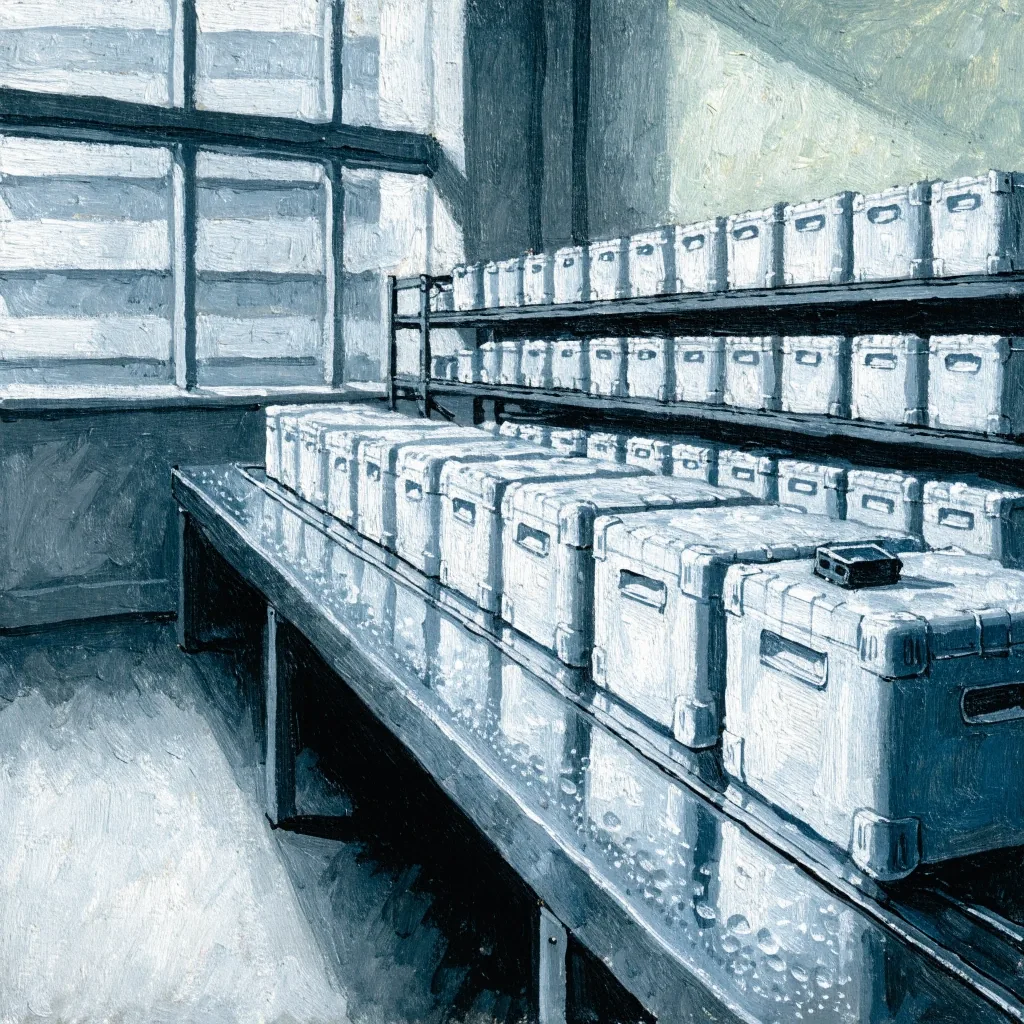
A line of temperature-logged clinical trial kit shippers on a depot rack under flat daylight

Study startup & go-live

Where RTSM go-live timelines slip

Someone has to read the vendor documentation closely.

An independent editorial resource on RTSM, IRT, and clinical technology for study teams planning a realistic go-live: what actually delays a deployment, which qualification steps run on their own clock, and how change control is decided before it is needed.

Released
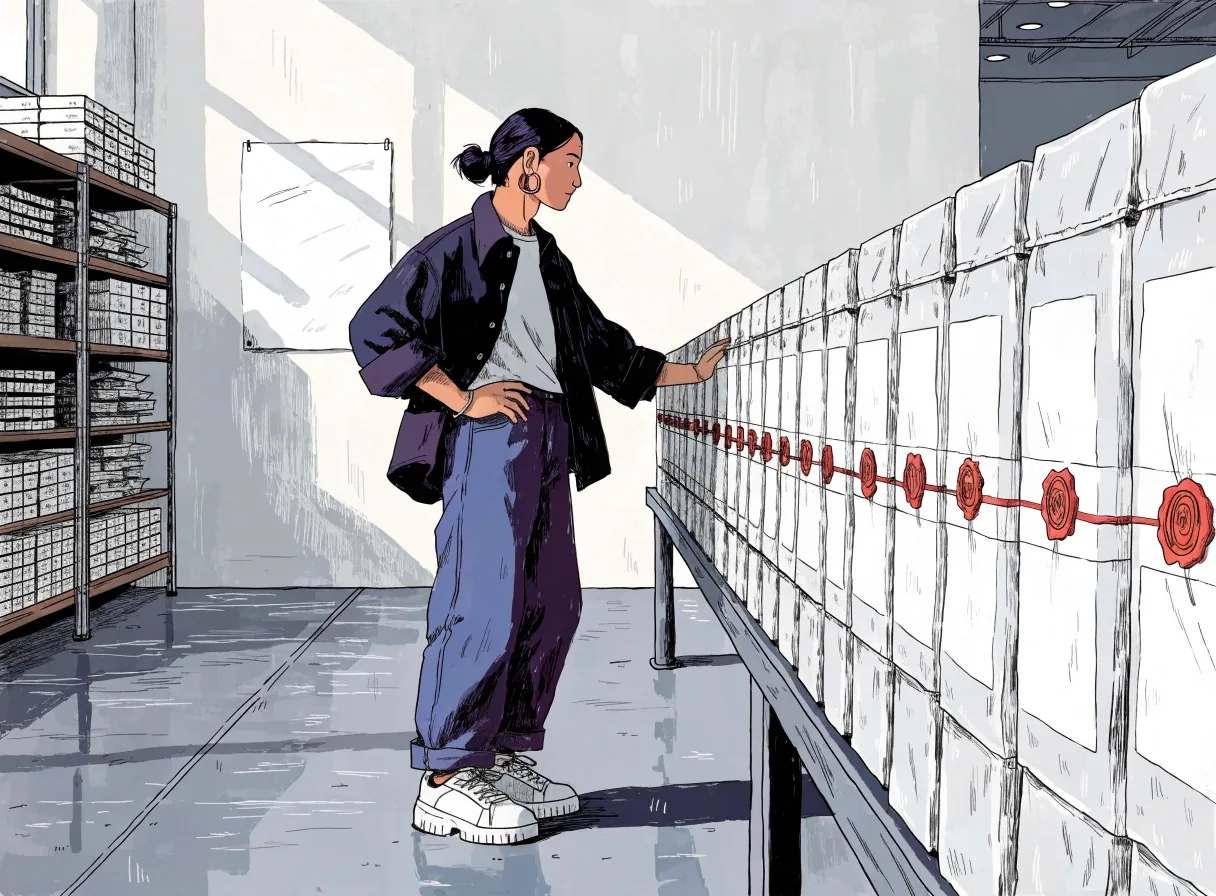
A depot bench with sealed clinical trial kit cartons on numbered shelf bays

Supply depot

Kit cartons staged by shelf bay, with the shipped position empty while the next shipment is packed.

A clinical operations coordinator at a workstation with a wall of blank pinned sheets

Study team

Configuration decisions, protocol questions, and the UAT script all pass across one desk.

Strapped shipment pallets staged on a freight apron under flat grey daylight

Freight & release

Pallets wait on the apron until the release decision is written down, not assumed.

A long clinical supply staging shelf with one empty bay and one carton slightly askew

Section one

Startup is a sequence, not a phase

Study startup is often treated as one phase on a Gantt chart, which hides the fact that it is a sequence of steps that depend on each other. Protocol finalization feeds RTSM configuration. Configuration feeds user acceptance testing. UAT feeds the go-live decision. Vendor qualification runs across all of it and can hold any of them. When one step slips, the ones behind it slip by default unless someone actively compresses the sequence. That is why RTSM timelines slip by weeks when a single configuration question goes unanswered for days.

03

User acceptance testing

Scripted scenarios run against your protocol, not the vendor's template.

04

Vendor qualification

Documentation review, quality agreement, and validation evidence — run in parallel.

05

Go-live decision

A real date backed by signed UAT and closed qualification, not a steering-committee target.

Section two

UAT is where timelines are tested

User acceptance testing on an RTSM is not a checkbox. It is a scripted set of scenarios that covers randomization, resupply, unblinding, and the site-facing interface, and it should be run by the people who will use the system rather than by the study team on their behalf.

The scenarios need to reflect your protocol's specific scheme, including edge cases like a randomization that triggers a resupply within the first enrolment block. Teams that scope UAT from the vendor's template tend to find the gaps after go-live. Teams that scope it from their own protocol find them in the test environment, which is cheaper.

The UAT script is worth writing twice

Write the scenario list once from the protocol, then review it against the RTSM's own configuration documentation before you execute. The second pass catches the scenarios that exist in your protocol but are not covered by anything in the test template, which is usually where the interesting problems live.

Kit allocation At least one scenario for a kit allocation edge case, run before go-live rather than during the first subject visit.
Unblinding One scenario that exercises the unblinding path the protocol actually specifies, including who authorises it.
Supply threshold One scenario for an amendment that changes a supply threshold, so the resupply logic is proved before it matters.
01

Vendor qualification runs on its own clock

Vendor qualification is the part of startup that most often runs in parallel and gets forgotten until it becomes critical. It includes the documentation review, the quality agreement, and whatever validation evidence your organization requires before the system touches live subjects.

The clock on this is not under your control in the way the RTSM build is, because it depends on the vendor producing documentation and your quality team reviewing it. Start it earlier than feels necessary. The two most common causes of a stalled go-live are a missing vendor document and a quality review slot that has to wait for the next cycle.

Parallel
02

Change control: deciding before you need it

Change control decisions look obvious in hindsight and are painful in the middle of a live study. The startup phase is where you decide how amendments will be handled. Does the study team stage changes and request a review, or does every amendment go through the vendor's change process?

Is there a threshold above which a change requires a formal qualification review, or does the existing validation cover it? Decide before go-live and write it down, because mid-study decisions about change control tend to become negotiations with the vendor, and negotiations take longer than any technical work.

Decide early

Superseded terminology

The same job, a different name on the label

Clinical technology vendors rename the same category every few years. When a protocol or a quality document still uses an older term, the comparison work is the same — only the searches get harder. Use the row below to read a legacy label against the term used in current vendor documentation.

IRT Interactive response technology — the older umbrella term, still seen in protocols and quality agreements written before the current naming settled.
IWRS Interactive web response system — usually refers to the supply-management and randomization function inside the broader platform.
IVRS Interactive voice response system — largely historical; the function now sits in a web interface rather than a phone call.
IRT Current term in vendor documentation: RTSM — randomisation and trial supply management

The release condition

What good startup looks like

Good startup is not fast startup. It is startup where the critical path is visible, the parallel work stays parallel, and nothing is waiting on an unanswered question. The study team knows which configuration scenarios matter, has written its own UAT script from the protocol, and has submitted vendor qualification paperwork before the build started. The go-live date is a real date, not an aspiration someone is defending in a steering committee. That is a modest standard, and it is the one most RTSM delays fail against.

A freight apron at dusk with staged pallets and a single distant figure

Beyond one country

Planning the go-live week

The week of go-live is not a launch event. It is the week when the system first encounters real subjects, real sites, and real data. Plan for a small buffer between the UAT sign-off and the first subject enrolment, because sites need training time on the site-facing interface, and that training rarely happens on the schedule anyone intended.

Have a named person on the study team who can answer configuration questions during that first week, and have the vendor's support contact documented in the protocol binder rather than in someone's inbox.

Review multinational considerations

Freight apron at dusk

When it slips

What to do when the timeline slips

When it does slip, work backwards from the go-live date and find the next real constraint. It is almost never the RTSM build itself. It is usually the qualification review slot, the UAT execution window, or a protocol question that nobody has escalated. Escalate the constraint, not the symptom.

And if the constraint is outside your control, decide early whether to shift the go-live date or accept a partial launch with the first subjects enrolled under a paper backup. Both are legitimate. Deciding late is what turns a slip into a delay.

Planning questions we hear most

How long should RTSM deployment take from contract to go-live?

There is no universal number, and vendors who quote one without knowing your protocol should be treated carefully. The realistic range depends on your study's randomization scheme, integration points, UAT scope, and vendor qualification requirements. Ask each vendor for a recent example of a study at your complexity and for a breakdown that includes the build queue, not just the configuration work.

Does UAT need to be run by the study team or by the site?

Both, and in that order. The study team writes and executes the protocol-level scenarios first, then site staff run the site-facing interface scenarios before go-live. Teams that skip the site-facing UAT tend to find their interface problems during the first subject visit, when the fix cost is much higher.

Can vendor qualification be started before the RTSM is configured?

Yes, and it should be. The documentation review, the quality agreement, and the validation evidence are largely independent of the specific configuration work. Starting them in parallel removes them from the critical path, and in most delayed go-lives we see discussed publicly, the qualification step is where the delay actually landed.

What if an amendment arrives during startup?

It depends on whether it touches randomization or supply rules. An amendment that changes strata or kit allocation thresholds may require a configuration change and a UAT re-run for the affected scenarios. An amendment that touches dosing or visit windows usually does not. Decide early which amendments go through the RTSM change process and write the rule down before the first one arrives.

Keep going: the guide explains every term used here, the platform comparison sets the same criteria against named vendors, and the vendor profiles show how each one handles qualification and change control.

Editorial note

Suvodav Agent is an independent editorial resource. We are not a vendor and we do not sell RTSM software, which is why this page can say plainly that most go-live delays are not a build problem. If a study team wants to compare platforms on delivery criteria or ask a specific question about startup sequencing, the contact page and the comparison set are the places to continue.

Released